

Understanding chanel handbag pricing has become essential for luxury collectors and enthusiasts navigating the evolving high-end accessories market. The French luxury house has implemented strategic pricing adjustments over the past decade that have reshaped the investment landscape for iconic pieces like the Classic Flap and 2.55. These changes reflect broader market dynamics, from global price harmonization to shifting consumer demand patterns, creating both challenges and opportunities for those seeking to acquire authentic Chanel pieces through retail or pre-loved channels.
The Historical Evolution of Chanel Handbag Pricing
The trajectory of chanel handbag pricing over the past decade reveals a consistent upward trend that has outpaced traditional inflation metrics. In 2015, the medium Classic Flap in caviar leather retailed for approximately $4,900 in the United States. By 2026, this same style commands a retail price exceeding $11,200, representing more than a 128% increase over eleven years.
Several factors have contributed to this dramatic escalation. Chanel implemented price increases totaling nearly 60% on some classic models since the end of 2019, a strategy that intensified during the pandemic years and continued through 2025. The brand's approach differs from competitors by implementing multiple smaller increases annually rather than one large adjustment.
Key Price Milestones and Percentage Increases
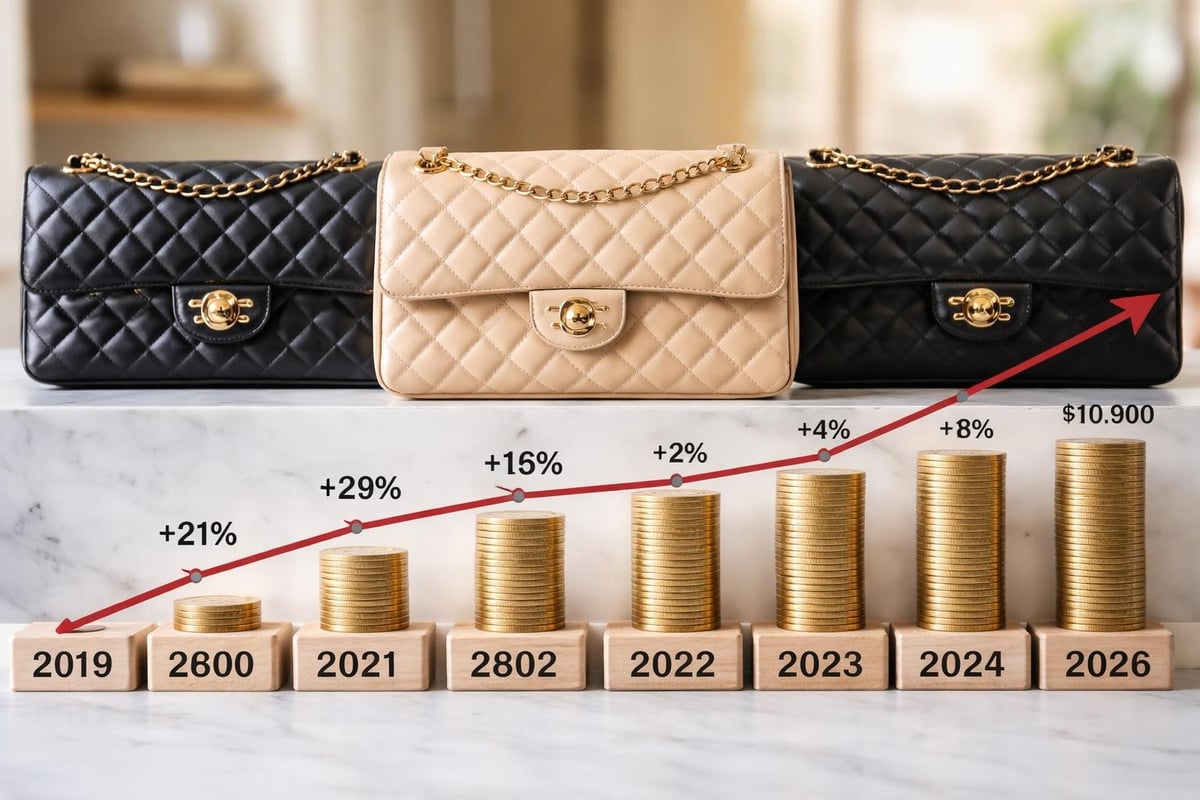
The pattern of price escalation has not been uniform across all models or time periods. Between 2020 and 2023, Chanel implemented price increases at an unprecedented pace, sometimes announcing adjustments three to four times per year.
|
Year |
Classic Flap Medium Caviar (USD) |
Percentage Increase from Previous Year |
|---|---|---|
|
2019 |
$5,800 |
- |
|
2020 |
$6,800 |
17.2% |
|
2021 |
$8,200 |
20.6% |
|
2022 |
$9,500 |
15.9% |
|
2023 |
$10,200 |
7.4% |
|
2024 |
$10,800 |
5.9% |
|
2025 |
$11,200 |
3.7% |
This deceleration in recent years suggests Chanel may be approaching a pricing ceiling where consumer resistance becomes more pronounced. Despite implementing these increases, Chanel experienced a revenue decline in 2024, indicating market sensitivity to continued price escalation.
Understanding the Factors Behind Chanel's Pricing Strategy
The luxury house's approach to chanel handbag pricing reflects multiple strategic considerations beyond simple cost recovery. Global price harmonization has been a primary driver, with Chanel working to minimize price disparities across different markets to reduce gray market activity and luxury tourism shopping.
Manufacturing cost increases have also contributed to pricing adjustments. Rising labor costs in Europe, where Chanel maintains its production facilities, combined with more expensive raw materials for exotic leathers and precious metal hardware, create genuine pressure on profit margins. However, industry analysts note that these cost increases don't fully account for the magnitude of price adjustments implemented.
Market Positioning and Brand Exclusivity
Chanel's pricing strategy serves to reinforce brand positioning at the apex of luxury fashion. By maintaining prices at or above competitors like Louis Vuitton and Dior, the brand signals uncompromising quality and exclusivity. The frequent price increases documented throughout 2025 demonstrate the brand's commitment to this positioning despite market headwinds.
Key strategic considerations include:
-
Maintaining perceived value through scarcity and high price points
-
Reducing discounting pressure in wholesale channels
-
Protecting brand equity against mass market expansion
-
Creating clear differentiation from contemporary luxury brands
-
Supporting secondary market values for existing owners
The pre-loved luxury market has benefited from these retail pricing strategies. As retail prices escalate, vintage Chanel bags from earlier production years become increasingly attractive to collectors seeking authentic pieces at more accessible price points.
Current Chanel Handbag Pricing Across Popular Models
Understanding the current pricing landscape requires examining specific models that represent different segments of Chanel's handbag collection. The Classic Flap remains the brand's flagship offering, but numerous other styles command significant price tags based on size, materials, and special features.
Classic Flap and 2.55 Pricing Breakdown
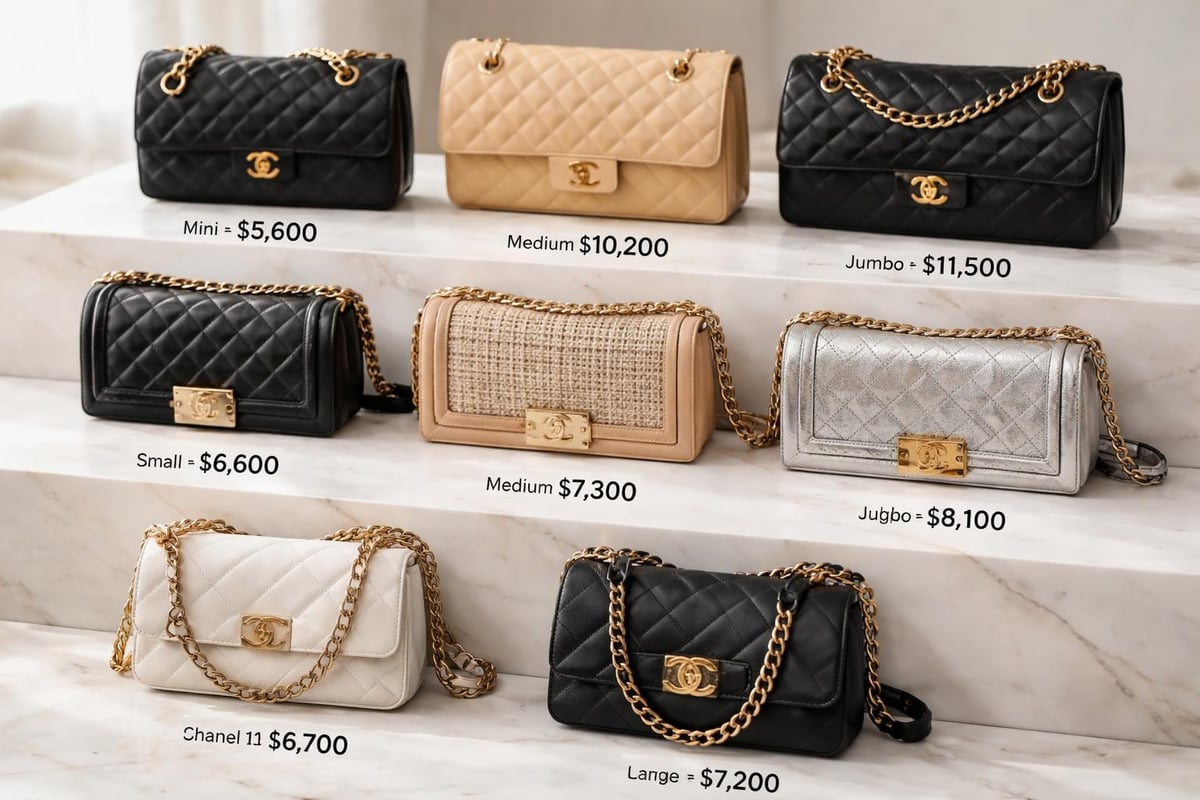
The Classic Flap series spans multiple sizes, each occupying a different price tier. The Mini size starts around $6,400, appealing to entry-level luxury consumers or those seeking a compact evening option. The Small size retails for approximately $9,200, while the Medium commands $11,200 as previously noted. The Jumbo size, offering maximum capacity, reaches $11,800 at current retail pricing.
Material selection significantly impacts pricing within these size categories. Lambskin typically commands a premium over caviar leather despite being less durable, reflecting its luxurious feel and traditional association with the brand's heritage. Expert guidance on lambskin versus caviar leather helps collectors understand these material distinctions and their impact on pricing.
Alternative Models and Their Price Points
Beyond the Classic Flap, Chanel offers several other iconic designs at various price points:
Boy Bag Collection:
-
Small Boy Bag: $6,900 - $7,400
-
Medium Boy Bag: $7,800 - $8,200
-
Large Boy Bag: $8,500 - $9,000
Chanel 19 Series:
-
Small Chanel 19: $5,400 - $5,900
-
Large Chanel 19: $6,200 - $6,800
-
Maxi Chanel 19: $7,200 - $7,800
Specialty and Seasonal Pieces:
-
Gabrielle Hobo (Small): $4,200 - $4,600
-
Deauville Tote: $3,800 - $4,200
-
Vanity Cases: $5,600 - $6,800
The original pricing evolution of models like the Chanel 19 demonstrates how even relatively recent introductions have experienced significant price appreciation since their debut.
Regional Variations in Chanel Handbag Pricing
Global price harmonization efforts notwithstanding, significant regional variations persist in chanel handbag pricing. These differences create opportunities for savvy collectors while also complicating direct price comparisons across markets.
European pricing typically runs lower than United States pricing when accounting for VAT refunds available to international tourists. A Medium Classic Flap might retail for €9,400 in Paris (approximately $10,200 USD after VAT refund), compared to $11,200 in New York. However, these advantages have diminished as Chanel has worked to close pricing gaps.
|
Region |
Medium Classic Flap |
Price Difference vs. USA |
|---|---|---|
|
United States |
$11,200 |
Baseline |
|
France (after VAT) |
$10,200 |
-8.9% |
|
United Kingdom |
$10,800 |
-3.6% |
|
Japan |
$11,500 |
+2.7% |
|
China |
$12,100 |
+8.0% |
|
UAE |
$10,600 |
-5.4% |
Asian markets, particularly China and Japan, often face premium pricing due to import duties and luxury taxes. This creates demand for purchasing during international travel or through trusted pre-loved sources that can offer more competitive pricing regardless of geographic location.
The Impact of Limited Editions and Special Materials
Standard chanel handbag pricing represents just the baseline for the brand's offerings. Limited edition releases, seasonal colors, and exotic material options command substantial premiums that can double or triple standard retail prices.
Exotic Leather Premium Pricing
Exotic leathers represent the pinnacle of Chanel's material hierarchy. Alligator skin adds approximately 200-250% to the base price of comparable caviar or lambskin models. A Medium Classic Flap in alligator retails for $28,000 to $32,000, while python versions command $18,000 to $22,000.
Exotic Material Price Multipliers:
-
Alligator: 2.5x to 3x base price
-
Python: 1.8x to 2.2x base price
-
Stingray: 1.5x to 1.8x base price
-
Lizard: 1.4x to 1.6x base price
These exotic options appeal to ultra-high-net-worth collectors seeking maximum exclusivity. The pre-loved market offers opportunities to acquire these pieces at more accessible price points, particularly for rare vintage examples from past decades.
Seasonal Releases and Runway Pieces
Chanel's seasonal collections introduce unique colorways, embellishments, and design variations that can command 30-60% premiums over classic versions. Pearl-embellished bags, tweed special editions, and collaboration pieces represent investment opportunities that may appreciate differently than standard models.
The challenge with seasonal pieces involves predicting long-term desirability. Some limited editions become highly sought-after collectibles, while others experience value depreciation as trends evolve. Understanding authentication details becomes crucial when acquiring these special pieces in the secondary market.
Investment Perspective on Chanel Handbag Pricing
The dramatic appreciation in chanel handbag pricing has positioned certain models as alternative investments competing with traditional asset classes. The Chanel Classic Flap has demonstrated consistent appreciation that rivals many financial instruments over the past decade.
Calculating investment returns requires considering both price appreciation and condition maintenance. A Medium Classic Flap purchased in 2015 for $4,900 and maintained in excellent condition could resell for $8,000 to $9,000 in the current pre-loved market, representing a 63-84% return before accounting for storage and maintenance costs. This compares favorably to many traditional investments over the same period.
Factors Affecting Resale Value
Not all Chanel handbags appreciate equally. Several factors determine which pieces maintain or increase value in the secondary market:
-
Color selection: Black and neutral tones retain value better than trendy seasonal colors
-
Hardware choice: Gold and silver hardware remain timeless; rose gold shows mixed performance
-
Size category: Medium and Small sizes demonstrate strongest resale demand
-
Material durability: Caviar leather withstands time better than lambskin, affecting long-term value
-
Condition maintenance: Professional cleaning and proper storage preserve investment value
The pre-loved luxury market offers access to Chanel Classic Flap bags from various eras, each representing different entry points for collectors based on production year and current condition.
Navigating the Pre-Loved Market for Chanel Handbags
As retail chanel handbag pricing continues escalating, the authenticated pre-loved market provides compelling alternatives for acquiring iconic pieces. This channel offers several distinct advantages beyond simple cost savings.
Vintage Chanel bags from the 1990s and early 2000s represent a unique value proposition. These pieces often feature superior craftsmanship from an era when production volumes were lower and quality control more stringent. A vintage Classic Flap in excellent condition might sell for $5,000 to $7,000, significantly below current retail while offering authentic heritage appeal.
Benefits of Pre-Loved Chanel Purchases:
-
Access to discontinued colors and styles unavailable at retail
-
Lower entry costs compared to current retail pricing
-
Opportunity to acquire vintage pieces with superior craftsmanship
-
Immediate availability without waitlists or purchase history requirements
-
Better value retention for well-maintained vintage examples
Authentication expertise becomes paramount when purchasing pre-loved Chanel. Professional authentication guidance helps buyers avoid counterfeit products that plague the secondary market.
Price Predictions and Future Trends
Analyzing historical patterns in chanel handbag pricing provides insight into potential future trajectories. However, recent market signals suggest the explosive growth of 2020-2023 may be moderating as consumer resistance strengthens.
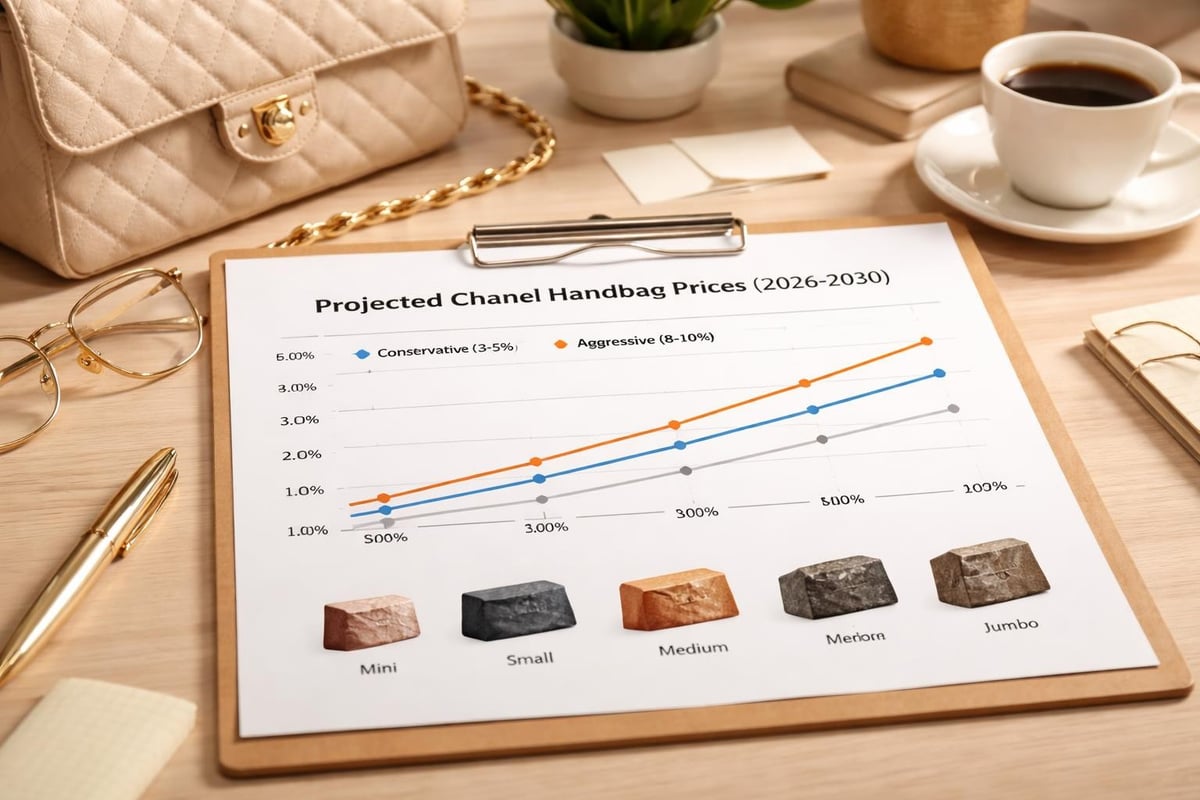
Industry analysis of Chanel's pricing patterns suggests annual increases in the 3-5% range may become the new normal, significantly lower than the double-digit increases of recent years. This moderation reflects market saturation at current price points and growing competition from other luxury brands offering comparable quality at lower prices.
Market Dynamics Shaping Future Pricing
Several factors will influence chanel handbag pricing through the remainder of this decade:
Economic considerations:
-
Global inflation trends and currency fluctuations
-
Consumer confidence in luxury spending
-
Competition from emerging luxury brands
-
Secondary market pricing pressure on new retail sales
Brand strategies:
-
Continued focus on exclusivity versus accessibility
-
Production volume decisions affecting availability
-
New model introductions and their pricing positioning
-
Digital sales channel development and pricing implications
The factors behind Chanel's pricing decisions extend beyond simple profit maximization to encompass long-term brand positioning and customer relationship management. Understanding these dynamics helps collectors make informed acquisition decisions.
Strategies for Smart Chanel Acquisitions
Whether purchasing at retail or through pre-loved channels, strategic approaches to chanel handbag pricing can maximize value and minimize regret. Successful collectors employ several tactics to optimize their acquisitions.
Timing purchases strategically around Chanel's announcement cycles can provide advantages. The brand typically implements price increases two to three times annually, usually in February/March and again in October/November. Purchasing just before announced increases captures maximum value, though predicting exact timing requires monitoring industry news sources.
Building Relationships and Access
Retail access to the most coveted Chanel pieces increasingly depends on purchase history and client relationships. Boutiques allocate limited inventory to established customers first, creating a two-tier system where new buyers face availability challenges regardless of willingness to pay current pricing.
The pre-loved market democratizes access to these same styles without purchase history requirements. Specialized retailers like SAIKA curate authenticated vintage and contemporary Chanel pieces, offering immediate availability across diverse styles and eras.
Acquisition strategies for different collector profiles:
-
Entry-level collectors: Focus on smaller sizes or alternative models like Chanel 19 offering lower entry points
-
Investment-focused buyers: Prioritize classic colorways and sizes with strongest historical appreciation
-
Fashion enthusiasts: Explore vintage pieces and seasonal variations unavailable at current retail
-
Completion collectors: Source rare and discontinued models through specialized pre-loved channels
Comparing Chanel Pricing to Competing Luxury Brands
Context for chanel handbag pricing emerges through comparison with competitor brands occupying similar luxury market positions. Hermès, Louis Vuitton, and Dior each pursue distinct pricing strategies that illuminate Chanel's approach.
Hermès maintains prices substantially above Chanel for comparable quality and desirability. A Birkin 30 in Togo leather retails for approximately $11,000 to $12,000, though availability constraints rather than price represent the primary acquisition barrier. This positions Chanel as relatively accessible by comparison, despite absolute prices that appear high in isolation.
Louis Vuitton prices most classic canvas bags below Chanel's leather offerings, with iconic pieces like the Neverfull or Speedy ranging from $1,800 to $2,400. However, Louis Vuitton's exotic and special edition leather pieces compete directly with Chanel at similar price points. Understanding trends across luxury brands helps collectors allocate resources across different houses.
|
Brand |
Flagship Model |
Current Retail Price |
5-Year Increase |
|---|---|---|---|
|
Chanel |
Classic Flap Medium |
$11,200 |
68% |
|
Hermès |
Birkin 30 Togo |
$11,500 |
52% |
|
Louis Vuitton |
Capucines MM |
$6,800 |
43% |
|
Dior |
Lady Dior Medium |
$6,500 |
38% |
These comparisons demonstrate that Chanel's aggressive pricing increases exceed most competitors, supporting the investment thesis for pre-owned pieces acquired before recent escalations.
The Role of Authentication in Pricing
Authentic chanel handbag pricing maintains clear premium over counterfeit products flooding markets worldwide. However, sophisticated replicas increasingly challenge casual buyers, making professional authentication essential for protecting investment value.
Authentication affects pricing at multiple levels. Obviously authentic pieces command full market value, while items with questionable provenance sell at discounts of 30-70% or become completely unsellable. The cost of professional authentication services, typically $50 to $150 per item, represents valuable insurance against far larger potential losses.
Key authentication elements affecting value:
-
Serial number consistency with production year and model
-
Hardware weight, engraving depth, and finishing quality
-
Leather grain patterns and texture consistency
-
Stitching precision and thread quality
-
Interior stamp placement and font characteristics
Reputable pre-loved retailers absorb authentication costs and risks, providing buyers with confidence that justifies any modest premium over private party transactions. Detailed authentication protocols separate legitimate sellers from those trafficking in counterfeits.
The evolution of chanel handbag pricing reflects broader luxury market dynamics while creating both challenges and opportunities for discerning collectors. Understanding historical trends, current pricing structures, and future projections enables strategic acquisition decisions that maximize both personal enjoyment and potential investment returns. For those seeking authenticated vintage and contemporary Chanel pieces at accessible price points, SAIKA offers expertly curated selections that combine heritage appeal with transparent pricing, helping collectors build meaningful luxury handbag portfolios without the constraints of retail boutique relationships or waitlists.